
 By
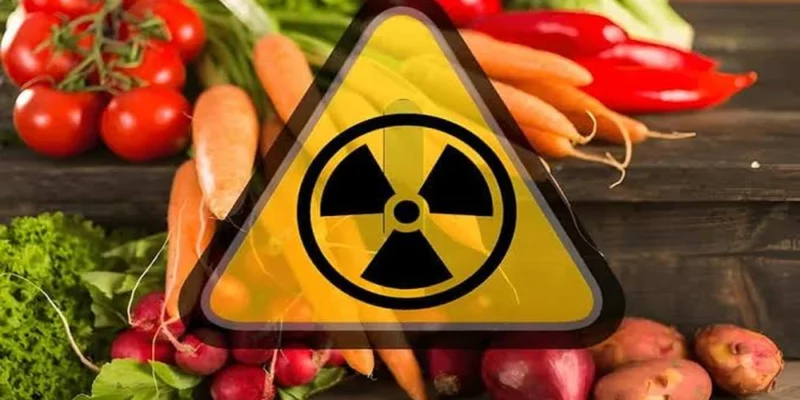
Every year a large share of harvested food is lost to insects, sprouting, mould and bacteria before it ever reaches a plate. Drying, canning, refrigeration and chemical fumigation all fight that loss in different ways. The irradiation method of food preservation does it with controlled energy rather than heat or chemicals, and it has been studied for decades by food scientists and public health bodies around the world.
The idea still makes many shoppers uneasy, mostly because the word “radiation” sounds alarming. Looking at what actually happens inside an irradiation facility, and at the rules that govern it, gives a clearer picture.
What Is Food Preservation by Radiation and How Does It Work?
Food preservation by radiation exposes food, usually already packed, to a measured amount of ionising energy. That energy passes through the product and damages the DNA of insects, bacteria, moulds and parasites, so they cannot multiply or survive. In bulbs and tubers, the same effect stops the cells that drive sprouting.
The food itself is not heated in any meaningful way, which is why the process is sometimes described as “cold pasteurisation”. Fresh produce stays fresh, spices keep their aroma better than with steam treatment, and frozen foods can be treated while frozen.
The amount of energy absorbed is called the dose, measured in kilograys (kGy). Dose is the single most important control in the process, because too little will not do the job and too much can affect texture, flavour or appearance.
Which Radiation Sources Are Used to Irradiate Food?
Three types of source are approved internationally under the Codex Alimentarius general standard for irradiated foods:
- Gamma rays from cobalt-60 (or, far less often, caesium-137), sealed radioactive sources held in a shielded chamber.
- Electron beams produced by machines, at energies up to 10 MeV.
- X-rays produced by machines, at energies up to 5 MeV.
Gamma facilities can treat large, dense pallets because gamma rays penetrate deeply. Electron beams switch on and off at the press of a button and treat products quickly, but they penetrate only a few centimetres, so they suit thinner packs. X-ray systems combine machine control with deeper penetration, though they are less energy-efficient.
The energy limits on these sources are set low enough that they cannot make food radioactive. Irradiated food is no more radioactive than luggage that has passed through an airport scanner.
What Do Low, Medium and High Dose Treatments Achieve?
Food scientists generally group irradiation for food preservation into three dose bands, each with a different purpose.
Low doses, up to about 1 kGy, are used to stop onions, potatoes and garlic from sprouting in storage, to kill or sterilise insects in grains, pulses and dried fruit, and to delay ripening in some fresh fruit. This band also serves as a quarantine treatment, allowing mangoes and other produce to cross borders without carrying fruit flies or weevils.
Medium doses, roughly 1 to 10 kGy, reduce spoilage organisms and disease-causing bacteria such as Salmonella, E. coli and Listeria in meat, poultry, seafood and spices. This is where much of the food safety benefit lies.
High doses, above 10 kGy, can sterilise food completely. They are used for specialised purposes such as meals for hospital patients with weakened immune systems and for space missions, and are not common in everyday retail food.
Is Irradiated Food Safe to Eat?
This is the question most people ask first, and the international evidence on irradiation food preservation in commercial use is consistent. A joint expert committee of the FAO, the IAEA and the WHO concluded in 1980 that irradiating any food up to an overall average dose of 10 kGy presents no toxicological hazard and raises no special nutritional or microbiological problems. A later WHO study group examined higher doses and reached a similar conclusion, provided the food stays palatable.
Like cooking, canning or freezing, radiation food preservation can reduce some vitamins, particularly thiamine and vitamin C, but the losses at normal doses are comparable to those from other processing methods. The process does not leave residues on the food, which is one reason it is used as an alternative to certain chemical fumigants.
Irradiation also has clear limits. It does not improve food that is already spoiled, it does not destroy toxins that bacteria have already produced, and it is not a substitute for clean handling, proper storage and good manufacturing practice.
How Is Irradiation Food Preservation Regulated in India?
India regulates the process at two levels. The Atomic Energy (Radiation Processing of Food and Allied Products) Rules, 2012, framed under the Atomic Energy Act, govern the facilities themselves, and the Atomic Energy Regulatory Board licenses and inspects irradiation plants for radiation safety.
On the food side, the Food Safety and Standards Authority of India (FSSAI) amended its food product standards in 2016 to bring radiation processing in line with the atomic energy rules. The regulations group foods into classes, such as bulbs and tubers, fresh fruits and vegetables, cereals and pulses, meat and seafood, and spices, and set the purpose and permitted dose limits for each class.
Labelling is mandatory. Irradiated food sold in packaged form must carry the international Radura symbol along with a statement that it has been processed by irradiation, and the label also gives details such as the purpose of treatment and the facility’s licence number. Because irradiated food looks, smells and tastes much the same as untreated food, the label is the only way a buyer can tell.
Why Do Exporters and Food Processors Choose Irradiation?
For exporters, irradiation often opens markets that would otherwise be closed. Several importing countries accept it as a phytosanitary treatment for fresh fruit, which is how Indian mangoes have been shipped to markets with strict pest rules. For spice processors, it offers a way to cut microbial load without the steam that dulls volatile oils or the fumigants some markets restrict.
Domestic benefits are just as practical. Less sprouting in stored onions and potatoes, fewer insect losses in pulses, and longer shelf life for some ready-to-eat products all mean less waste across the supply chain.
What Should Consumers Know Before Buying Irradiated Food?
Look for the Radura symbol and the accompanying statement on the pack, and read the purpose of treatment if it is given. Store irradiated food exactly as you would any other: refrigerate perishables, respect use-by dates and cook meat and poultry thoroughly. Irradiation for food preservation lowers risk and slows spoilage, but safe handling at home still finishes the job.







Comments