
 By
By 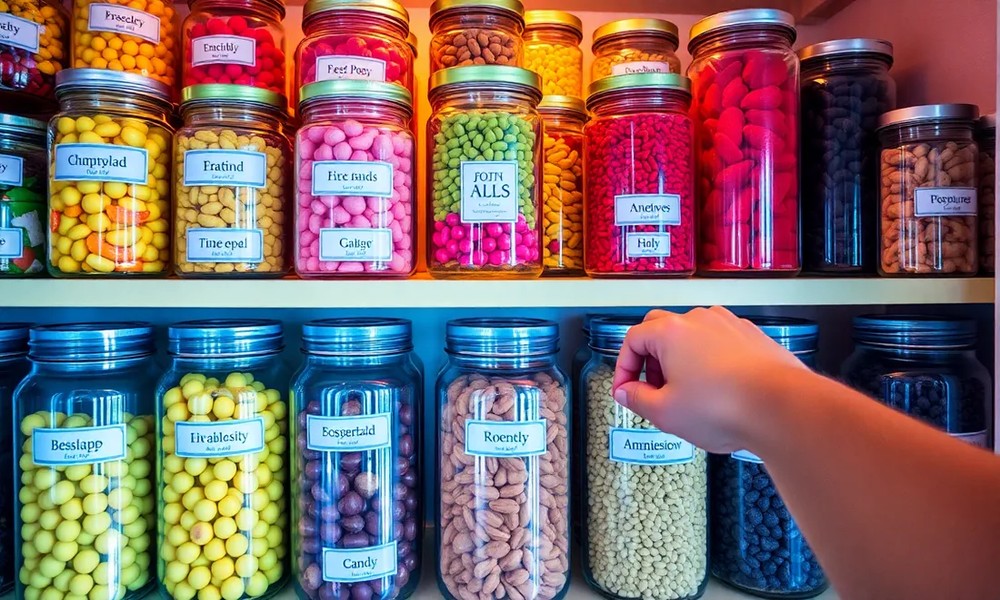
Here is something worth knowing about german candy that does not come printed on the packaging. The moment a bag or box gets opened, the clock starts. Not in a dramatic way, not overnight, but steadily and in ways that are easy to miss until the product is noticeably past its best.
Humidity is the first thing working against it. Sugar pulls moisture in from the surrounding air without any help, and depending on the season or the room, that process moves faster than expected. A hard piece left out in a warm kitchen during summer becomes sticky within a couple of days. In drier conditions, the same piece holds longer, but chewy varieties behave the opposite way entirely, toughening up as moisture leaves them. Chocolate sits in its own category. It does not need much to trigger bloom. A degree or two of repeated temperature variation is enough to separate fat from the rest of the structure, leaving that dull greyish film on the surface. The flavour underneath often remains intact, but the texture shifts and the appearance raises doubts. None of this is inevitable. It happens because storage after opening tends to get treated as an afterthought rather than something that actually needs attention.
Which methods genuinely work?
Pressing a bag closed and calling it done is the most common approach, and it is also the least effective one past the first day or two. Air continues moving through folded packaging slowly but consistently, and the result after a week is not far from having left things open on the counter.
Glass jars with proper rubber seals are hard to argue against for most hard and individually wrapped varieties. No scent absorption, no chemical interaction, easy to check contents without opening. Rigid plastic with a locking lid does a reasonable job as well, though it demands thorough cleaning between uses because plastic holds onto previous odours in a way glass does not. Some practical points that tend to get skipped:
- Liquorice and anise-flavoured pieces should never share a container with milder varieties since the scent transfers and embeds itself over days.
- Any container going into use needs to be completely dry first, because residual moisture from washing defeats the purpose before storage even begins.
- Tin with a pressed lid works adequately for chocolate-based pieces, offering both closure and a degree of temperature buffering.
- Short-term resealable pouches are fine for two days at most and should not be relied upon for anything longer than that.
How does placement affect results?
A good container in a bad spot does not solve much. This is where a lot of otherwise careful storage falls apart, because temperature and placement tend to get ignored once the container question is settled.
Most confectionery does well enough at stable room temperature, but stable is doing a lot of work in that sentence. Shelving near a refrigerator, an oven, or a window can be unstable. Over time, heat accumulates in those areas in non-obvious ways. This better tolerates chocolate, but neither is better.
Refrigerating chocolate is reasonable, but it poses its own problems. Condensation settles onto the surface as it warms, affecting both the texture and appearance of the piece. As it returns to room temperature, it will be reduced without being eliminated.
When container choice, product separation, placement, and temperature consistency are all handled together, the difference in how long quality holds is not marginal. It is genuinely noticeable.





Comments